
Energy Performance Certificate 2026: what’s changing for property owners and investors
Definition of the EPC (Energy Performance Certificate)
The Energy Performance Certificate (EPC) is now a mandatory assessment that forms part of the Technical Diagnosis File (TTD) whenever a property is sold or let. It assesses a property’s energy consumption and CO₂ emissions, assigning it an energy rating ranging from A to G.
In practical terms, this thermal assessment provides an immediate indication of a property’s thermal performance. A flat rated A will be considered highly efficient, whilst a property rated G will be described as a ‘heat trap’.
Why is the Energy Performance Certificate (EPC) a key factor in the property market?
By 2026, the Energy Performance Certificate had clearly taken on a whole new dimension. Whereas it was once seen as just another administrative formality within the DDT, it now acts as a genuine filter in the property market. It is no longer merely a matter of providing information, but rather of regulating usage, guiding decisions and, above all, curbing certain behaviours.
In practical terms, the energy performance certificate now influences three key factors: the property’s value, its suitability for letting, and its appeal to buyers. Today, an apartment or house with a poor energy rating may see its sale significantly delayed, regardless of its location or amenities. Conversely, a property with a good energy rating (A, B or C) enjoys an immediate competitive advantage.
This shift can be explained by the gradual tightening of regulations. Thresholds relating to energy consumption and CO₂ emissions have become key benchmarks for the entire market. We are no longer simply talking about thermal comfort, but about compliance with standards. A poorly rated property is now seen as a risk: a financial risk for an investor, a risk of renovation work for a buyer, and a risk of being banned from letting in the short or medium term.
In this context, the concept of thermal performance takes on strategic importance. It is no longer solely about energy bills, but about a property’s ability to remain viable over time. A property rated F or G, often described as a ‘heat trap’, becomes a vulnerable asset. It almost invariably requires an energy audit, thermal insulation work, improved ventilation or the replacement of equipment to limit heat loss.
For investors, the impact is direct on profitability. An energy-inefficient property entails not only high renovation costs but also uncertainty regarding letting. Conversely, a property with good energy efficiency guarantees greater tenant stability, controlled running costs and more sustainable value appreciation.
On the buyer’s side, behaviour has also changed. The EPC is now taken into account from the very first stage of the search. It acts as a selection criterion, just like location or floor area. A poor energy rating often leads to more aggressive negotiation, or even the abandonment of the project. Conversely, an energy-efficient property immediately reassures buyers regarding future costs and compliance with future regulations.
Finally, from a commercial perspective, energy efficiency ratings have become a powerful marketing tool. Highlighting a good energy rating, low energy consumption or recent improvements (such as the installation of double glazing) helps to justify a price, speed up a sale and attract a more discerning clientele.
How is it calculated today?
The calculation of the Energy Performance Certificate (EPC) is based on a standardised method that takes several criteria into account:
- The quality of the thermal insulation
- The heating and hot water systems
- Ventilation
- Fixtures and fittings (such as double glazing)
- The overall heat loss of the property
Since the recent reform, the calculation is based solely on the physical characteristics of the property and no longer on utility bills. This enhances the reliability of the energy performance certificate.
New EPC regulations to be aware of in 2026
Homes affected by the new requirements
From 2026, all properties intended for rent or sale will be subject to these new standards. Properties classified as F and G, which are considered energy-inefficient, are a particular focus for the authorities.
An energy audit is now required for these properties when they are sold, in order to provide buyers with accurate information on the work needed to improve their energy efficiency.
Schedule of rental bans: 2025, 2028 and 2034
The law sets out a phased timetable for eliminating energy-inefficient properties:
From 2025: a ban on renting out properties rated G
From 2028: a ban on properties rated F
By 2034: properties rated E will also be affected
This timetable encourages landlords to plan ahead and improve the energy efficiency of their properties.
Energy thresholds and EPC grades from A to G
The Energy Performance Certificate is based on two key factors: the property’s energy consumption and its CO₂ emissions. These two indicators are combined to assign a single energy rating, ranging from A to G, which reflects the property’s overall performance.
In practical terms, primary energy consumption is expressed in kWh/m²/year. It takes into account all uses of the property: heating, hot water, lighting, and sometimes air conditioning. Added to this is an analysis of CO₂ emissions, which assesses the property’s environmental impact based on the energy sources used (electricity, gas, fuel oil, wood, etc.).
Each letter corresponds to a specific rating:
A: highly efficient housing, low energy consumption and very low emissions
B and C: energy-efficient properties with good energy performance
D: intermediate level, still acceptable on the market
E: the start of less energy-efficient housing, often requiring improvements
F and G: energy-inefficient properties, characterised by significant heat loss and poor thermal performance
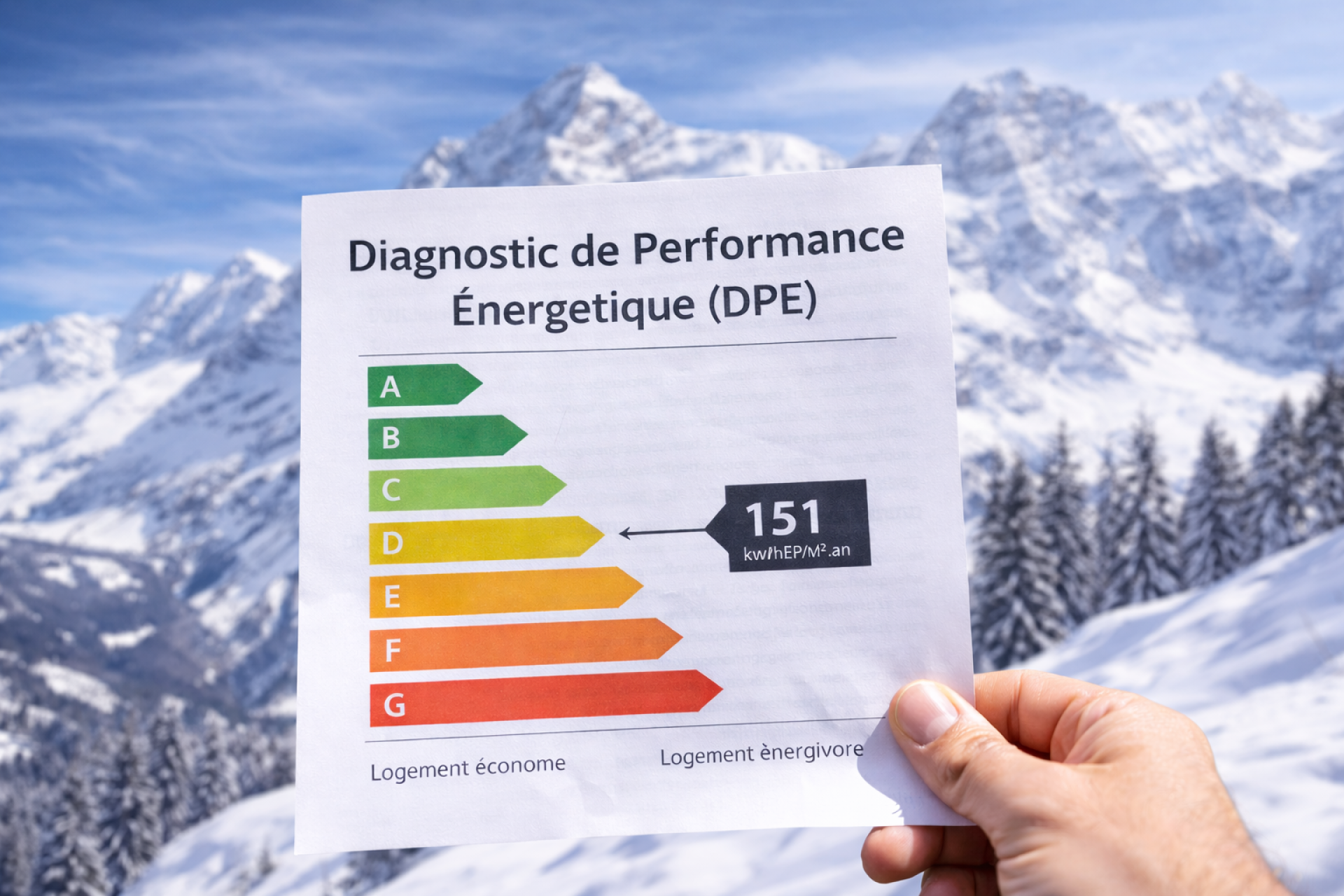
What the 2026 Energy Performance Certificate actually means for the rental property market
Legislation on energy-inefficient buildings
The most energy-inefficient properties are gradually being phased out of the rental market. A property classified as ‘G’ is now considered substandard by current standards.
This means that a landlord can no longer offer a property with poor thermal performance for rent without having carried out renovation work.
The implications for landlords
For landlords, the implications are significant:
- An obligation to carry out thermal insulation work
- A need to improve ventilation and heating systems
- The requirement to carry out an energy audit in certain cases
These requirements may involve a substantial investment, but they also help to increase the property’s value.
The impact on rental income and profitability
The impact of the Energy Performance Certificate on rental income is now clear and measurable. By 2026, a property’s energy rating will directly affect its ability to generate a steady income and secure a long-term investment.
A property with a good energy rating (A to C) has an immediate advantage in the rental market. It attracts more prospective tenants, reduces the time taken to let the property and minimises periods of vacancy.
The reason for this appeal is simple: tenants today are particularly mindful of energy consumption and service charges. A property with good thermal performance guarantees manageable bills, which is becoming a decisive factor, particularly against a backdrop of rising energy costs.
Conversely, an energy-inefficient property, often rated F or G, faces a number of obstacles. Firstly, it suffers from a negative image due to its status as a ‘heat trap’. Secondly, it exposes tenants to high energy bills, which significantly reduces its appeal. As a result, the property may remain vacant for longer, forcing the landlord to reduce the rent to compensate.
But the impact does not stop there. Regulations now directly govern the rents of the most energy-inefficient properties. In some cases, it is prohibited to increase the rent between two tenants if the property does not meet a certain level of thermal performance. This constraint automatically limits the growth of rental income and weighs on overall profitability.
The impact of the Energy Performance Certificate in 2026 on property sales
The impact of the Energy Performance Certificate on a property’s sale price
The Energy Performance Certificate now has a significant impact on a property’s price. Buyers factor the cost of renovation work into their offer.
A property with a good rating can sell more quickly, with little room for negotiation.
The depreciation of energy-intensive assets
Properties rated F or G often suffer a significant reduction in value. This reduction can be as much as 10 to 30 per cent, depending on the market.
However, this situation creates opportunities for investors willing to carry out renovation work.
Buyers’ expectations in 2026
By 2026, buyer behaviour has changed significantly. The Energy Performance Certificate is no longer just one indicator among many: it has become a key deciding factor right from the earliest stages of the search. Even before viewing a property, many buyers analyse its energy rating to assess its suitability.
This shift can be attributed to a growing global awareness of the costs associated with energy consumption. Today, buying a home is no longer limited to its purchase price: prospective owners also factor in long-term expenses. A property with a poor energy rating is immediately associated with high bills, or even major works to improve its thermal performance.
Beyond comfort, these criteria are driven by a desire to safeguard the investment. A well-rated property offers greater certainty for the future: it already meets current standards and minimises the risks associated with regulatory changes. Conversely, a property considered to be energy-inefficient is increasingly viewed with suspicion. Buyers immediately factor in the cost of an energy audit and the work required to improve its energy efficiency.
Building works and energy-efficient renovations: how can you improve your energy performance certificate?

Insulation, heating, joinery…: a focus on the most effective home improvements
To improve an energy assessment, certain measures are particularly effective:
- Improving thermal insulation (roof, walls, floors)
- Installing double glazing
- Optimising ventilation
- Replacing an energy-inefficient heating system
The aim is to reduce heat loss and improve overall energy efficiency.
Average budget and return on investment
Costs vary depending on the scale of the work. A full renovation can be a significant investment, but it allows you to:
- Increase the property’s value
- Reduce energy consumption
- Improve comfort
The return on investment is often evident in the medium term.
Financial support and schemes available in 2026
There are several schemes available to support homeowners: MaPrimeRénov’ / Zero-interest eco-loan / Local grants
These schemes make it easier to carry out an energy audit and the necessary renovation work.
Energy Performance Certificates and mountain housing: are there any specific considerations?
Climate constraints and their impact on energy performance
In ski resorts, weather conditions increase the need for heating. Heat loss is often greater, which makes thermal insulation and the quality of the equipment even more crucial to maintaining good thermal performance.
Second homes and energy performance certificates: a special case
Second homes, which are common in mountain areas, are also subject to the Energy Performance Certificate (EPC). Even if they are not always let out, their energy rating affects their resale value.
Investing in 2026: is it still worth buying a property with an F or G energy rating?
Bargain opportunities
Properties rated F or G can present attractive opportunities. Their purchase price is often lower, which allows for a profit margin once the renovation work is complete.
The benefits of a sound renovation strategy for enhancing a property’s value
A well-thought-out strategy, including an energy audit and targeted improvements, can transform an energy-inefficient property into an energy-efficient one.
This helps to improve the energy rating, reduce CO₂ emissions and maximise profitability.
The 2026 Energy Performance Certificate and property transactions: mistakes to avoid
Certain mistakes can jeopardise a property development project:
- Underestimating the importance of an energy performance assessment
- Underestimating the cost of the work
- Ignoring changes in regulations
- Failing to anticipate future bans
Proactive planning is essential to ensure a successful transaction.
Chalet Collection’s support for your property project in Saint-Martin-de-Belleville in 2026
With the Energy Performance Certificate (EPC) set to become mandatory in 2026, having the support of local professionals is a real advantage.
In Saint-Martin-de-Belleville, Agence des Alpes - Collection Chalet guides you through every stage:
Analysis of your property’s thermal performance
Valuation based on its energy rating
Renovation advice to improve its thermal performance
Support with selling or letting
With in-depth knowledge of the mountain property market and the constraints surrounding energy consumption, the agency helps you secure and maximise the value of your property project in a rapidly changing environment.
Charly.G
